

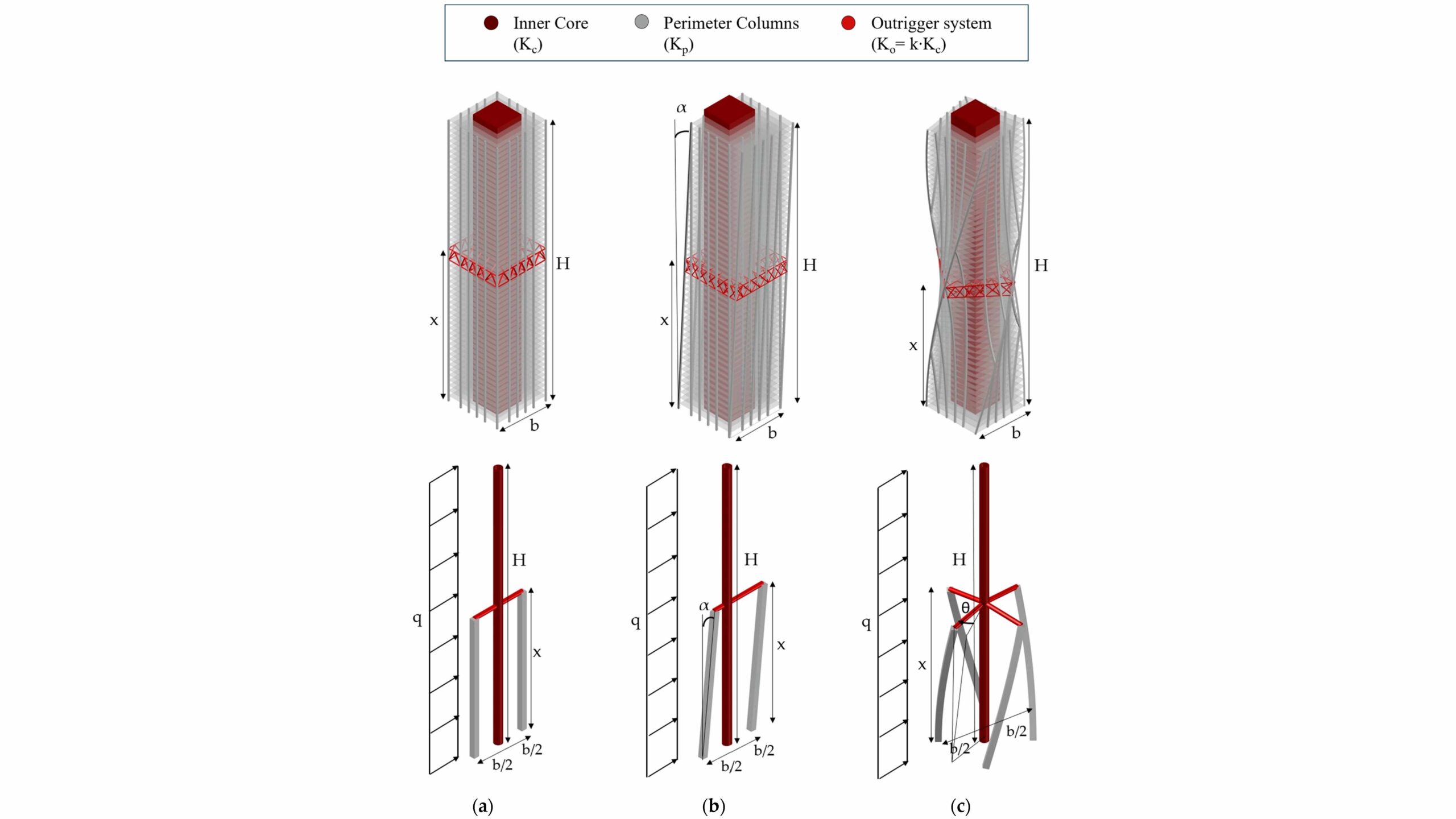
As buildings become taller, keeping them stable becomes an increasing challenge. Usually, engineers use strong cores made of steel or other durable material to keep the building from collapsing from wind and weather forces. However, most of the times, more than just a strong core is needed to ensure the building is stable. For this reason, engineers install an outrigger system.
An outrigger system connects the central cores to large exterior columns using structural beams called outriggers. When the building is faced with strong winds, the outriggers allow for the exterior columns to stay stable against the wind. This system allows for the building to resist too much swaying and to be more stable. Rather than relying on one element like a core to provide all of the stability to the building, engineers designed a system that could use multiple parts working together. This ultimately increases the overall strength of the building by distributing the load of the building throughout multiple components.
Many of the world’s tallest buildings like the Burj Khalifa utilize outrigger systems to ensure its safety. The Burj Khalifa uses outriggers that connect the hexagonal core to mechanical columns that make up the perimeter of the building. This allows for the Burj Khalifa to maintain a strong structure without relying solely on a single element. Compared to other traditional core-only or frame systems, the outrigger systems drastically increase the stiffness of buildings. This prevents too much lateral swaying and allows for the construction of extremely thin skyscrapers.
I first discovered this term when I was reading about the construction of tall skyscrapers and the technology they use. I never heard of the technology and assumed it was an advanced design technique used only in a few buildings. In actuality, outrigger systems are essential in tall commercial buildings to maximize their safety, durability, and stability.

Most Commented Posts