

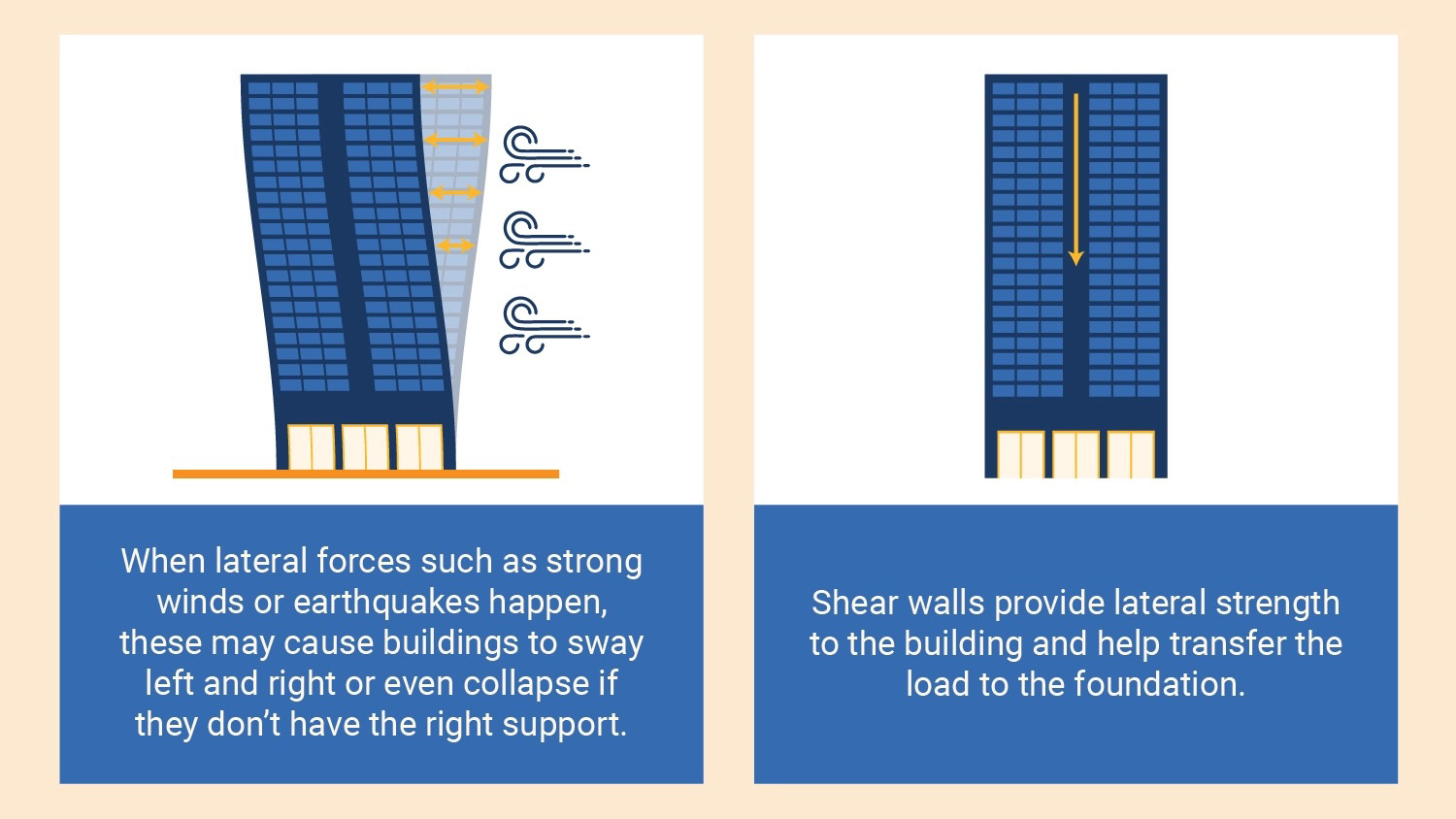
While looking over drawings of building plans, I noticed how some walls were marginally thicker than other walls in the building. I thought at first that these walls where thicker because they had more weight to support, but after doing some more research, I learned the real reason these walls were so thick is to withstand the horizontal forces created by wind and earthquakes.
These walls are called shear walls and are specifically integrated into buildings that experience large horizontal forces from wind or natural disasters all the time. Skyscrapers are one example, where their tall height makes them susceptible to constant pressure from winds. Shear walls are usually built from reinforced concrete thanks to its high compression strength but can also be built from steel and wood. Engineers carefully determine the location and thickness of these walls to ensure that the building can resist the forces in an efficient way. This allows for the building to maintain strength while leaving some flexibility for the architectural design.
Residential towers in California are constantly under threat from earthquakes and strong winds. Shear walls are built surrounding stair wells and elevators, and act as a strong central core for the building. The walls are designed to take most of the force to allow for the rest of the building to endure less stress. Since California experiences frequent seismic activity, lateral-force resistance is a top priority in structures. Structures rely heavily on resisting horizontal forces as well as vertical forces. Horizontal forces are a constant threat to buildings that can be addressed thanks to shear walls and the design behind them. I was able to learn through this research how structural walls work together with columns and beams to keep all forces that a building experiences from causing collapse to the building.

Most Commented Posts