

In my internship, I learned how to use the architectural drawing tool, Revit. While learning this, it occurred to me that engineers no longer use traditional 2D drawing to draw plans for buildings. Nowadays, they use 3D modeling software like Revit, AutoCAD, and Civil3D. All of these models share one thing in common: they are all Building Information Modeling
(BIM) software.
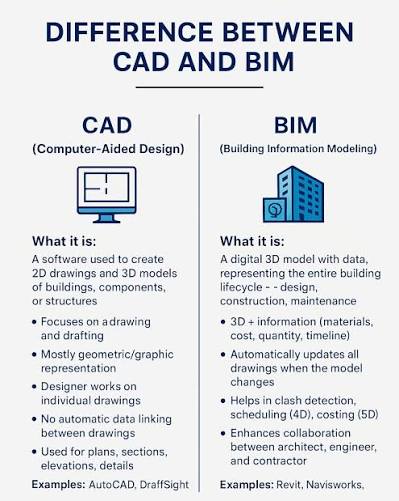
BIM is a type of software for architects and civil engineers and creates an intelligent, three dimensional digital model that combines architecture, structure, and other disciplines of construction into one software. It allows engineers to see conflicting designs before they are built on the site. For example, if a structural beam interferes with an air-conditioning unit, engineers will be able to tell on the software itself before construction starts, allowing for design changes to be quick and easy. BIM software does simple calculations like area, elevations, and dimensions for the architects, saving time for them to work on the design. It
estimates costs, can schedule construction, and manage buildings throughout the life cycle.
BIM software is a huge help to architects and civil engineers by taking out manual, unimportant tasks and automating them. It saves money and time through the early detection of clashes and streamlines collaboration, all on one interface. One digital workspace is shared, allowing for easy collaboration. Rather than old software like Computer-Aided Design (CAD), BIM contains information and properties with real-world properties. Older models had a higher chance of errors, giving engineers more work to try and find the errors to fix them. Drafting was manual in older models, but in BIM models, its automatic and real-time updates. Designs are no longer limited to only the design phase in BIM models as well, since it goes all the way to facility management.
BIM software is a huge upgrade from traditional 2D drawing software. It allows engineers to have one software for all stages of development, keeping drawings and plans more accurate. The chance of errors is much lower in BIM models, and drafting is much more eQicient. BIM software revolutionizes civil engineering and helps speed up construction unlike ever seen before.


Most Commented Posts