

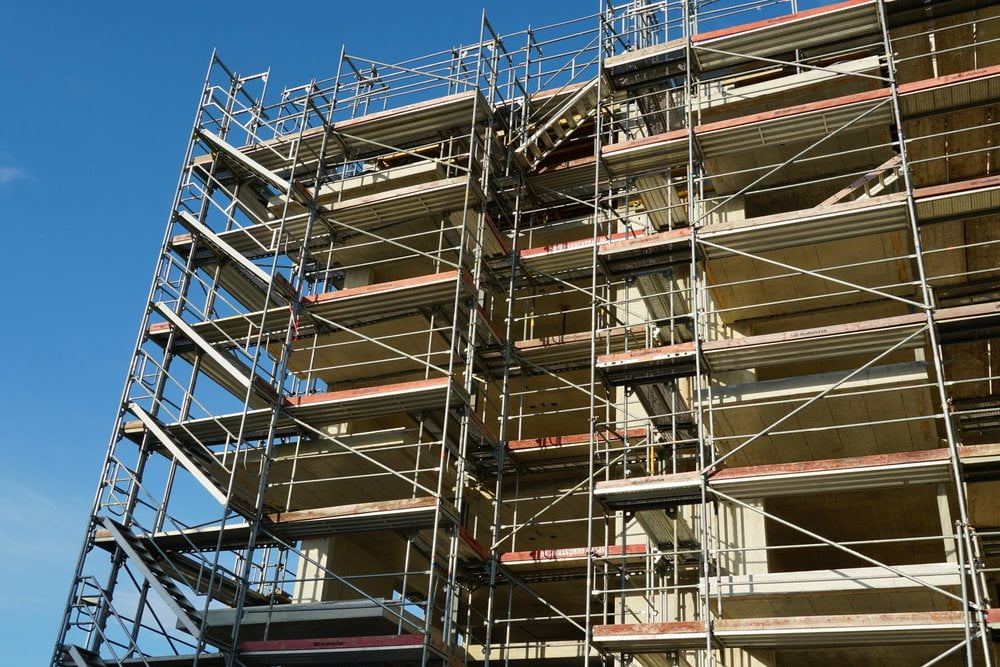
While visiting construction sites, I noticed that engineers would set up structures that cover large buildings before taking them down once they were finished. Engineers seemed to use them as ways to traverse the building or hold certain parts up. Eventually, when the project was finished, the structures were taken down before the building was opened. I wondered what purpose these structures served, and why they were vital to construction.
Temporary structures are structures built during construction and taken down before its completion to facilitate with the construction. They provide support for the building until it is fully built and help workers access different parts of the building safely and easily. Some types of temporary structures include scaffolding, shoring, and cofferdams. Scaffolding is made up of elevated platforms that support workers and materials during construction. Tall buildings require scaffolding to work on high altitude exteriors without risking injury from the workers. Shoring is a temporary structure that supports parts of a building while it is being built. Typically, structural integrity is low while a structure is being built, which is why shoring is required to keep it from collapsing. Once the structure or excavation is completed and reinforced, the shoring can be removed, allowing for the building to stand on its own. Cofferdams are temporary dams created when construction occurs near or in water. It blocks water from entering the area and allows for the water inside to be pumped out for construction.
Temporary structures are essential in construction for the safety of engineers and ease of construction. They are used for traversing harsh terrain or for keeping engineers safe. Concrete bridges are one example where temporary supports are required until the concrete is strong enough to stand on its own. Even though temporary structures are eventually taken down, they still had an important role to play in the construction of the building and is the reason any building could be built with ease.


Leave a Reply